High security · North Oshawa
Safe Installation & Servicing in North Oshawa
The till drawer has been holding two days of cash because the new shop never got a proper safe, and a locked drawer under the counter is the only thing standing between that cash and anyone who works late.
Safe Installation & Servicing
In plain words
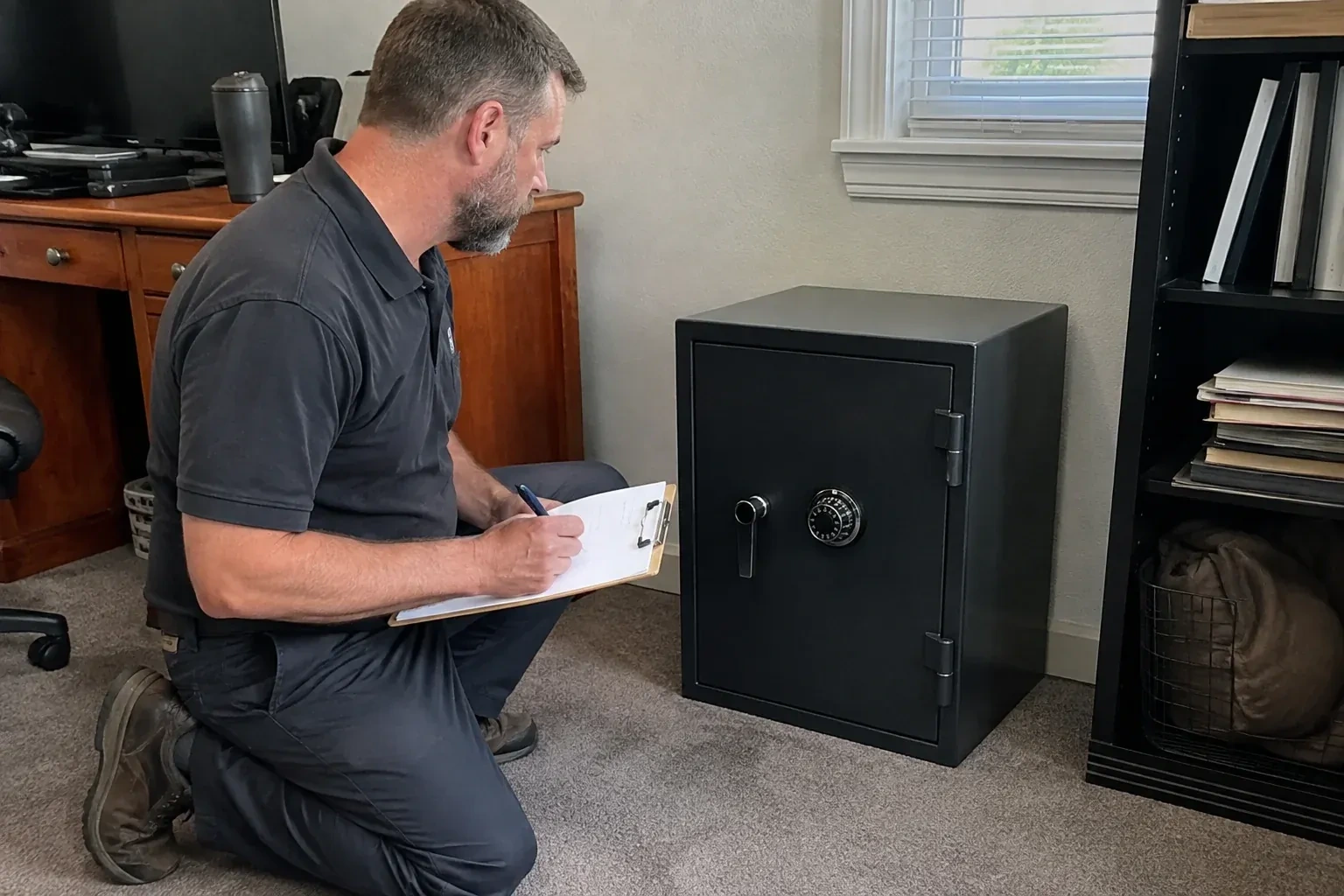
The lock on a safe is either a mechanical dial built around a wheel pack and gates, set and tested by a trained hand, or an electronic keypad running on batteries, and each has its own service needs. A new mechanical lock is set to a combination chosen by the owner and tested through a full open-and-close cycle before installation is called finished. An electronic lock gets fresh batteries, a reprogrammed code, and a check that the low-battery warning actually sounds before it dies. Either way, nobody but the owner leaves with the working combination or code.
How the visit goesA dinner service ends with a stack of bills and a handful of credit slips, and right now they sit in an unlocked cash box on a shelf until morning, because nobody has gotten around to anything sturdier.
North Oshawa
How the visit goes
The condition of a safe that is already in place
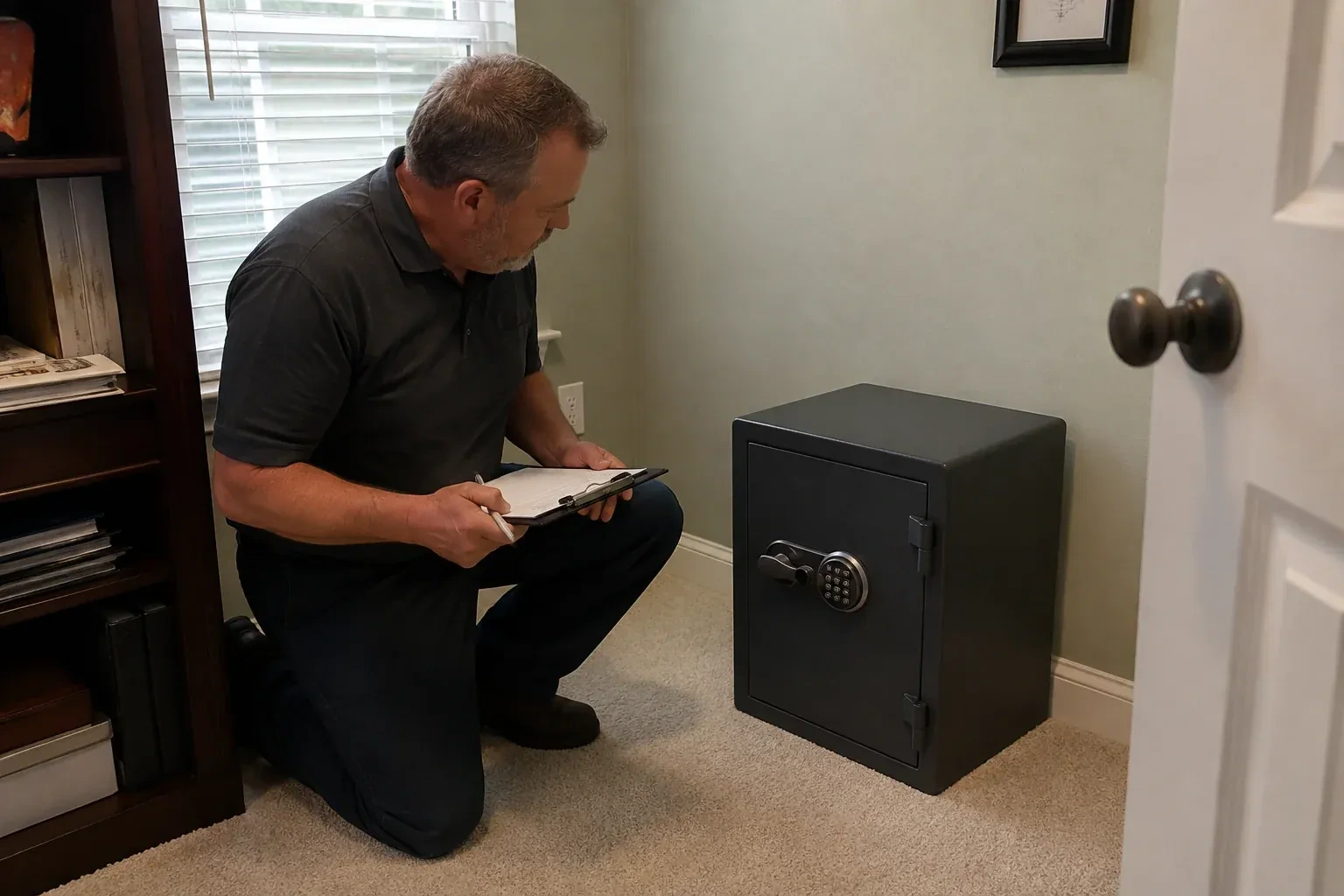
For a servicing visit, the first look is at what years of sitting quietly have done to the unit. Bolt-work is worked by hand to feel for stiffness, grinding, or a bolt that does not fully retract. Hinges and the door seal are checked for rust or a gap that lets in air. The locksmith also asks how long it has been since anyone changed the batteries or tested the lock, because a unit that has never had attention since it was installed usually needs more than a light check to bring it back to full working order.
Bringing an existing safe back into full working order
Servicing starts with the bolt-work: the mechanism is opened, cleaned of old grease and grit, and lubricated with a product suited to steel bolt-work rather than a general household oil. The lock is cycled repeatedly and adjusted if it binds or hesitates, and any handle or spindle that has worked loose is tightened. Batteries in an electronic lock are replaced as routine maintenance rather than waiting for a failure, and the door seal and hinges are checked and freed if they have picked up rust.
Batteries that get changed before they fail
An electronic lock gives some warning before it dies, usually a beep or a flashing light during normal use, and treating that warning as a job to do that same week rather than eventually is what keeps a dead battery from turning into a locked-out morning. Keeping a spare battery of the correct type near the safe, rather than searching for one after the warning starts, closes the loop. The mechanical override key behind the keypad is worth keeping somewhere separate from the safe itself, not taped underneath it.
Safe Installation & Servicing
In the van
- Nine-volt backup battery
- Bolt-work lubricant
- Torque wrench and socket set
- Rated safe (burglary and fire)
- Level and floor shims
What affects the quote
Same fees day, night or weekend
1Condition of an existing safe
Rust on hinges, stiff or grinding bolt-work, a lock that hesitates, or anchoring that was never done all add work beyond a routine check on a servicing visit.
2Building access restrictions
A property requiring a booked loading dock, a service elevator reservation, or coordination with building management before a heavy delivery can arrive adds scheduling steps beyond the installation work itself.
3Battery and accessory needs
An electronic lock needs a battery of the correct type on hand, and a fire-rated unit benefits from desiccant supplied at installation, both small additions to the visit.
Safe Installation & Servicing: questions
Can the combination or code be changed after installation?
Yes, on both mechanical and electronic locks. A mechanical dial is reset to a new combination by working inside the lock body, while an electronic keypad is simply reprogrammed at the keypad or through its service menu. Changing it after a change in staff, a move, or simply out of caution is routine work rather than anything unusual, and it can be arranged as its own visit.
Why does the inside of my fireproof safe feel damp?
A fire-rated interior works by sealing tightly, and that same seal traps ordinary household humidity over time with nowhere to go. Opening the door for a few hours every few weeks lets trapped air exchange with the room, and a desiccant packet inside absorbs moisture between those openings if it is refreshed on schedule. A musty smell or a soft-feeling document is the interior telling you it needs airing out.
Can an existing safe be bolted down after years of sitting loose?
In most cases, yes. The floor or wall behind it is checked the same way as for a new installation, anchor points on the safe itself are located, and hardware suited to that surface is fitted without needing to move the unit far from where it already sits. An older safe occasionally has anchor holes that were never used, which makes this part of the job simpler than starting from scratch.
High Security Locks
Safe Installation & Servicing near you
A locksmith's week in North Oshawa is a mix of small fixes and bigger decisions. A cylinder rekeyed after a lost key, a deadbolt added to a door that never had one, a shop rekeyed after staff changes, a safe that finally opens. The pages below describe each service and how the visit usually goes.