Change or rekey · Oshawa
Lock Rekeying
One key for the front door, another for the back, a third for the side door into the garage, and a fourth for the shed. You stand on the step every evening flipping through them in the dark, trying each one until something turns.
Lock Rekeying
In plain words
Rekeying is really about knowing who can open your door. Over the life of a home, keys are lent to trades, handed to neighbours for the holidays, given to a cleaner or a dog walker, and copied at the hardware store. Nobody keeps a list. Rekeying draws a line: from today, the only working keys are the ones counted into your hand. Good practice afterwards is simple, and a locksmith will suggest it: know how many keys exist, know who holds each one, tag them with a colour or code rather than the address, and rekey again whenever a key leaves your control.
How the visit goesThree months of renovation are finally done. The kitchen looks wonderful, and along the way a general contractor, a tile installer, a plumber and an electrician each carried a key to your front door at one point or another.
Oshawa
How the visit goes
Smart locks and user-rekeyable cylinders
Modern hardware gets its own look. Many keypad or app-controlled deadbolts have a conventional override cylinder behind a cover that can be rekeyed to the house key so the backup key is not a stranger on your ring, though some models are key-free and use an external battery backup instead. Some residential cylinders are designed to be reset by the owner with a small tool and a working key; the locksmith checks whether one has been reset correctly and whether it accepts the new key. Where a smart lock is being kept, codes are reviewed at the same time so a departed keyholder's code goes the way of their key.
Bringing several doors onto one key
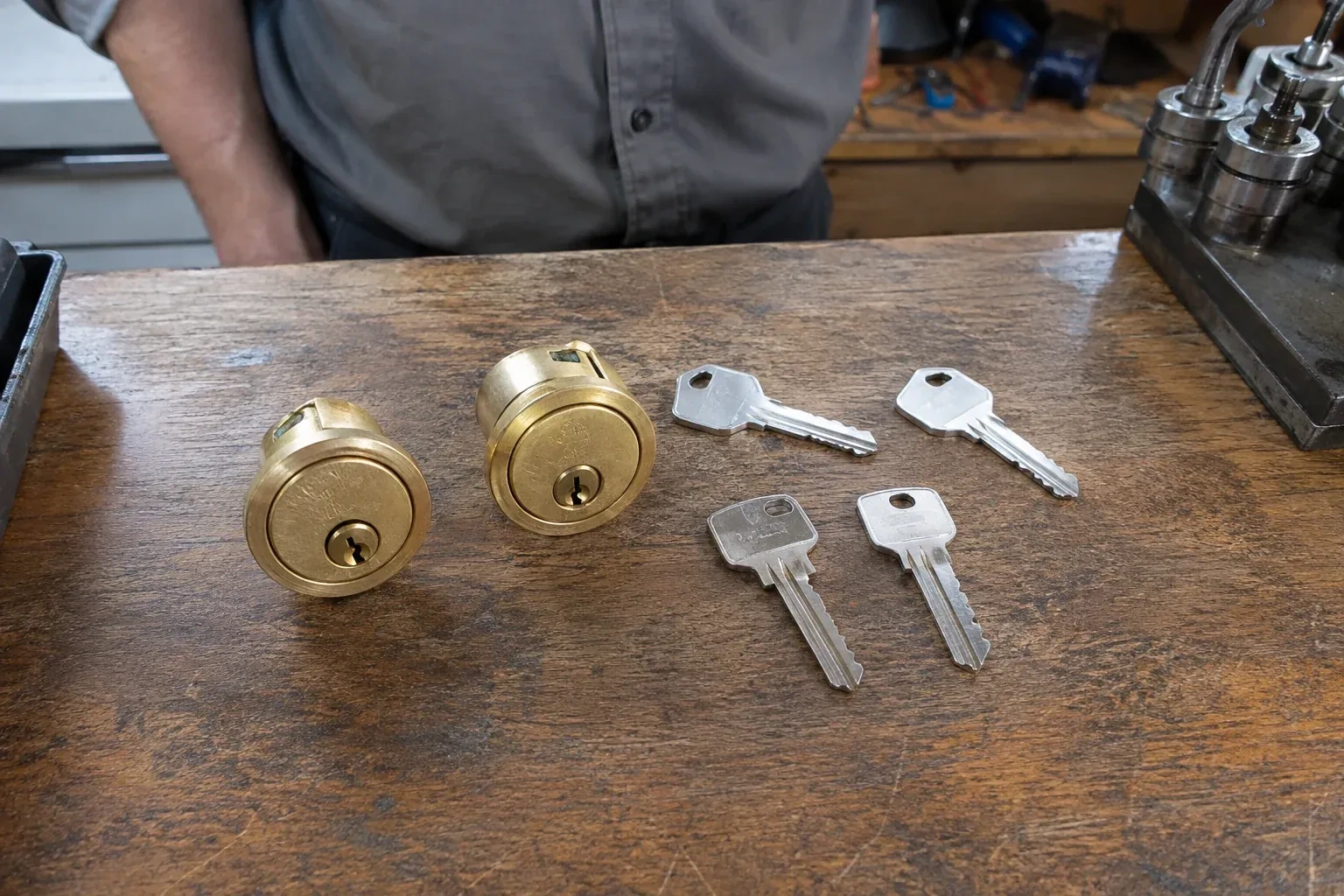
Keying doors alike is the same operation repeated with the same new key. Once the first cylinder is pinned and proven, the locksmith removes the second, follows the plug out, and loads bottom pins to the identical depths so the same key operates it, and so on around the house. Where a door carries a cylinder from a different keyway family, that cylinder is exchanged for a matching one in the same finish and then pinned to the house key. The result is one key on your ring that turns every exterior door, with the individual locks unchanged in appearance and function.
For landlords: the tenant's copies and the paperwork
After a rental unit is rekeyed, the incoming tenant receives their keys, the landlord keeps a copy as the tenancy rules expect, and the number issued is written on the move-in record so the count at move-out is easy to check. The former tenant's keys are retired. Where a building has several suites, the locksmith can keep each on its own key while the shared entry stays on a common one, and the note of which key belongs to which door becomes the start of a keying chart. That chart is what makes the next turnover a matter of one cylinder rather than a guessing game about who has what.
Lock Rekeying
In the van
- Graded bottom pin kit
- Retaining clip tool
- Code cutter or key duplicator
- Plug follower
- Key tags and keying record
What affects the quote
Same fees day, night or weekend
1How many cylinders are included
Each cylinder is removed, pinned and tested on its own, so a single deadbolt and a house with six exterior locks plus a shed and a gate are very different visits, and the quote follows the count.
2One key group or several
Keying every door alike is the simplest plan. Setting up separate keys for a basement suite, an office or a shed adds a group to pin and label, and the quote shows that as separate work.
3Access to each door being rekeyed
A rekeying visit goes smoothly when every door is reachable without delay: an empty unit, a cleared hallway, or someone available to let the locksmith into each room. Locked common areas, tenants who are out, or furniture blocking a cylinder all add time the locksmith accounts for on site.
Lock Rekeying: questions
Do the old keys really stop working?
Yes, at every cylinder that was rekeyed. Once the bottom pins are changed, a key cut to the old combination lifts them to the wrong heights and the plug will not turn. The locksmith proves this at each door by trying the old key after the new one, because any door missed from the list would still answer to the old key. That is also why the walk around the property at the start matters: every door meant to be included has to be on the list.
Can all my doors be made to work with one key?
Usually, yes. Where the cylinders accept the same style of key blank, each can be pinned to one new combination, so a single key runs the front, back, side and garage doors. A lock from a different keyway family is brought into the group by exchanging its cylinder for a compatible one in the same finish. During the first walk around the property the locksmith reads every keyway and tells you up front which doors can be keyed alike.
What exactly does rekeying a lock change?
What changes depends on the cylinder. Many locks turn when a row of small bottom pins lines up at a precise level, set by the cuts on your key, and during a rekey the locksmith tips those pins out and loads a set that lines up with a different key, cut new for you; some residential cylinders instead reset a side-locking bar without removing any pins. From then on the new key operates the lock and older keys do not, and the hardware on the door stays as it was.
Change or Rekey Locks
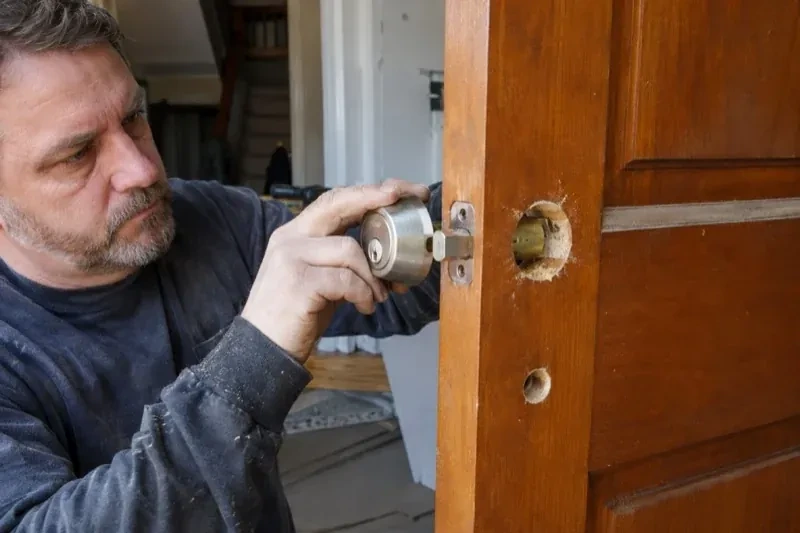
- Lock Replacement & UpgradeThe brass handleset has gone blotchy and green where the winter salt reaches it, and the coating on…
- Vintage Mortise Lock ServiceYou bought a house with its original hardware and a bag of loose keys.
- Smart Lock InstallationThe kids get home before you do and the spare key has been lost twice this school year.
Lock Rekeying near you
Every lock service we provide in Oshawa starts with the same first step, which is looking at the door properly before deciding anything. The individual pages below explain what that look involves for each job, how the work is carried out, and what to expect from the hardware afterwards.