High security · Oshawa
Safe Installation & Servicing
The till drawer has been holding two days of cash because the new shop never got a proper safe, and a locked drawer under the counter is the only thing standing between that cash and anyone who works late.
Safe Installation & Servicing
In plain words
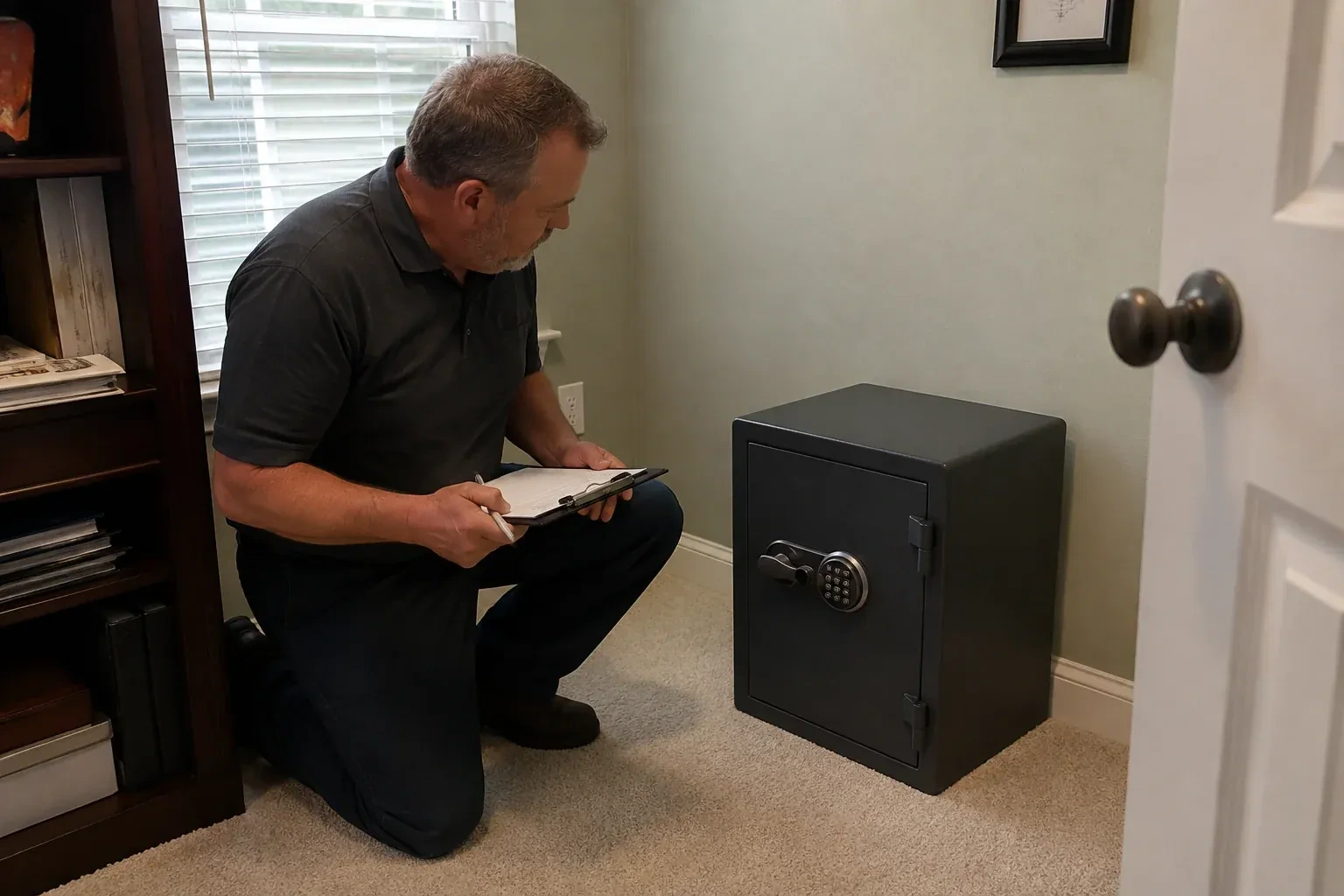
Relocating an existing safe is closer to a small structural project than a simple carry. The unit is unbolted, moved on proper equipment rather than dragged, and protected through doorways and stairwells that were never designed with several hundred pounds of steel in mind. At the new address the floor or wall construction is checked again from scratch, because a slab that held the safe at the old office may be entirely different from the one at the new address, and anchoring hardware is chosen to match rather than reused automatically.
How the visit goesA community group counts the weekend's raffle and bake-sale cash on a kitchen table, then carries it home in a tote bag until the bank opens Monday, because there has never been anywhere safer to leave it.
Oshawa
How the visit goes
What kind of lock is already, or will be, on the door
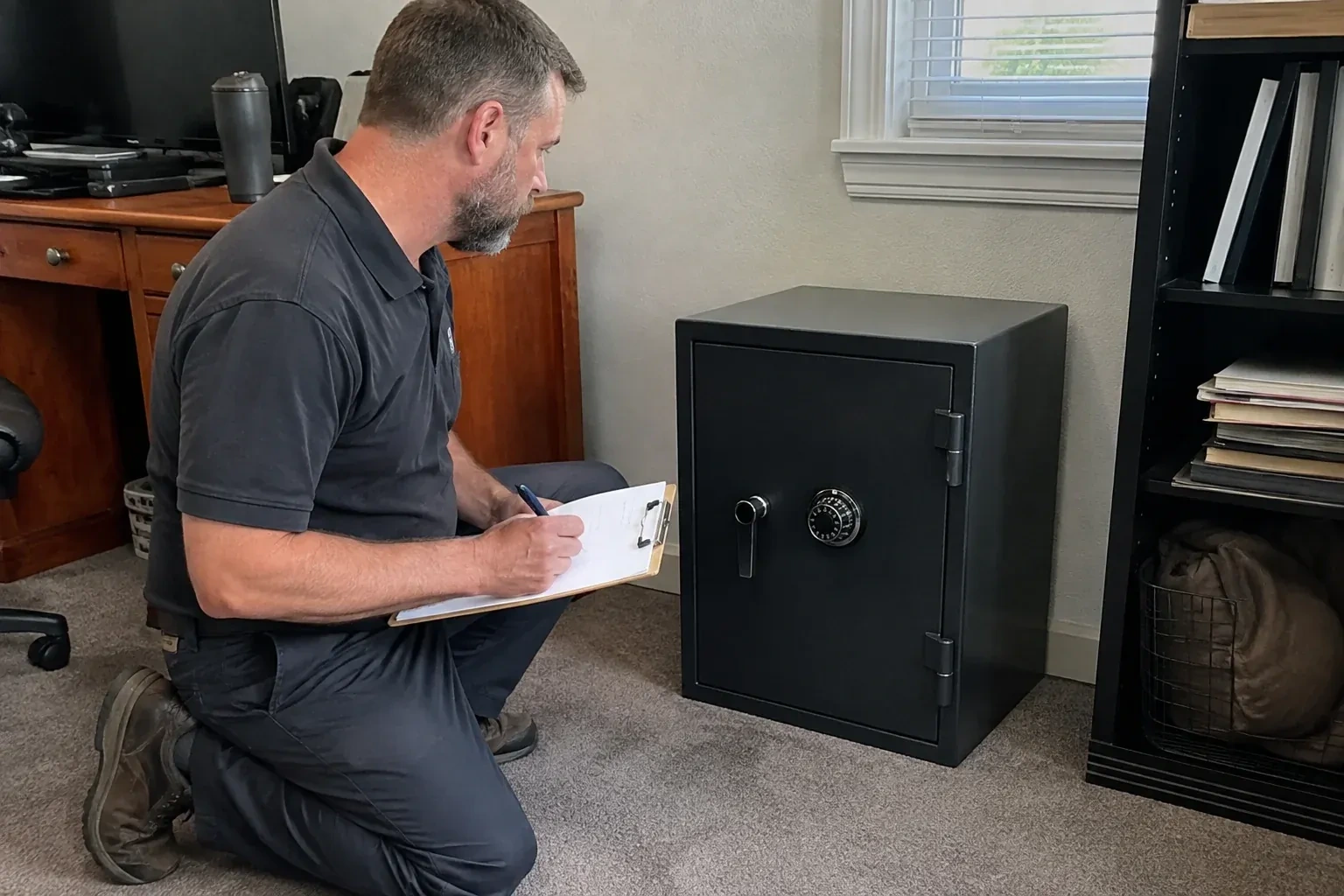
A mechanical dial and an electronic keypad are serviced differently, so the lock gets identified early. On a new installation this is a straightforward choice by the owner. On an existing safe, the locksmith checks whether the dial turns smoothly through a full combination, whether an electronic keypad still lights up and accepts a code, and whether a hidden mechanical override exists behind the keypad in case the batteries run flat. Any handle that binds or clicks without retracting the bolt gets traced back to the lock before the rest of the service continues.
Moving a safe without moving the problem with it
Relocating a bolted-down safe starts with removing the existing anchors cleanly, since a broken bolt left in the floor becomes someone else's problem later. The safe is walked or wheeled out on equipment built for its weight, with the route measured in advance so it clears every doorway and turn. At the new address the same assessment happens as for a brand-new installation: the floor or wall is identified, the safe is leveled, and it is anchored again from scratch rather than assumed to sit safely just because it once did elsewhere.
Bolt-work that keeps moving smoothly
The internal mechanism that throws and retracts the bolts benefits from the same kind of attention a door lock gets, on a longer cycle. A dry or purpose-made bolt-work lubricant, applied every year or two depending on how often the safe is opened, keeps the mechanism from stiffening with old grease or picking up rust in a damp room. Household oil is generally the wrong choice here, since it tends to attract dust and grit rather than shed it the way a purpose-made lubricant does.
Safe Installation & Servicing
In the van
- Nine-volt backup battery
- Bolt-work lubricant
- Torque wrench and socket set
- Rated safe (burglary and fire)
- Level and floor shims
What affects the quote
Same fees day, night or weekend
1Requests for concealment
Fitting a safe into a closet floor, a recessed wall cavity, or behind a built-in panel takes more planning than a straightforward open placement, and can limit which units will actually fit.
2An insurer's or head office's stated requirement
Some businesses are told by a policy or a head office exactly what rating a safe on the premises needs to meet, which narrows the choice of unit before other factors are weighed.
3Access route to the final position
Stairs, narrow doorways, tight corners, and whether an elevator or loading dock is involved all affect how the safe gets to its spot and how much handling that route requires.
Safe Installation & Servicing: questions
Can the combination or code be changed after installation?
Yes, on both mechanical and electronic locks. A mechanical dial is reset to a new combination by working inside the lock body, while an electronic keypad is simply reprogrammed at the keypad or through its service menu. Changing it after a change in staff, a move, or simply out of caution is routine work rather than anything unusual, and it can be arranged as its own visit.
Why does the inside of my fireproof safe feel damp?
A fire-rated interior works by sealing tightly, and that same seal traps ordinary household humidity over time with nowhere to go. Opening the door for a few hours every few weeks lets trapped air exchange with the room, and a desiccant packet inside absorbs moisture between those openings if it is refreshed on schedule. A musty smell or a soft-feeling document is the interior telling you it needs airing out.
Can an existing safe be bolted down after years of sitting loose?
In most cases, yes. The floor or wall behind it is checked the same way as for a new installation, anchor points on the safe itself are located, and hardware suited to that surface is fitted without needing to move the unit far from where it already sits. An older safe occasionally has anchor holes that were never used, which makes this part of the job simpler than starting from scratch.
High Security Locks
Safe Installation & Servicing near you
Every lock service we provide in Oshawa starts with the same first step, which is looking at the door properly before deciding anything. The individual pages below explain what that look involves for each job, how the work is carried out, and what to expect from the hardware afterwards.