Car keys · Oshawa
Motorcycle & Scooter Keys
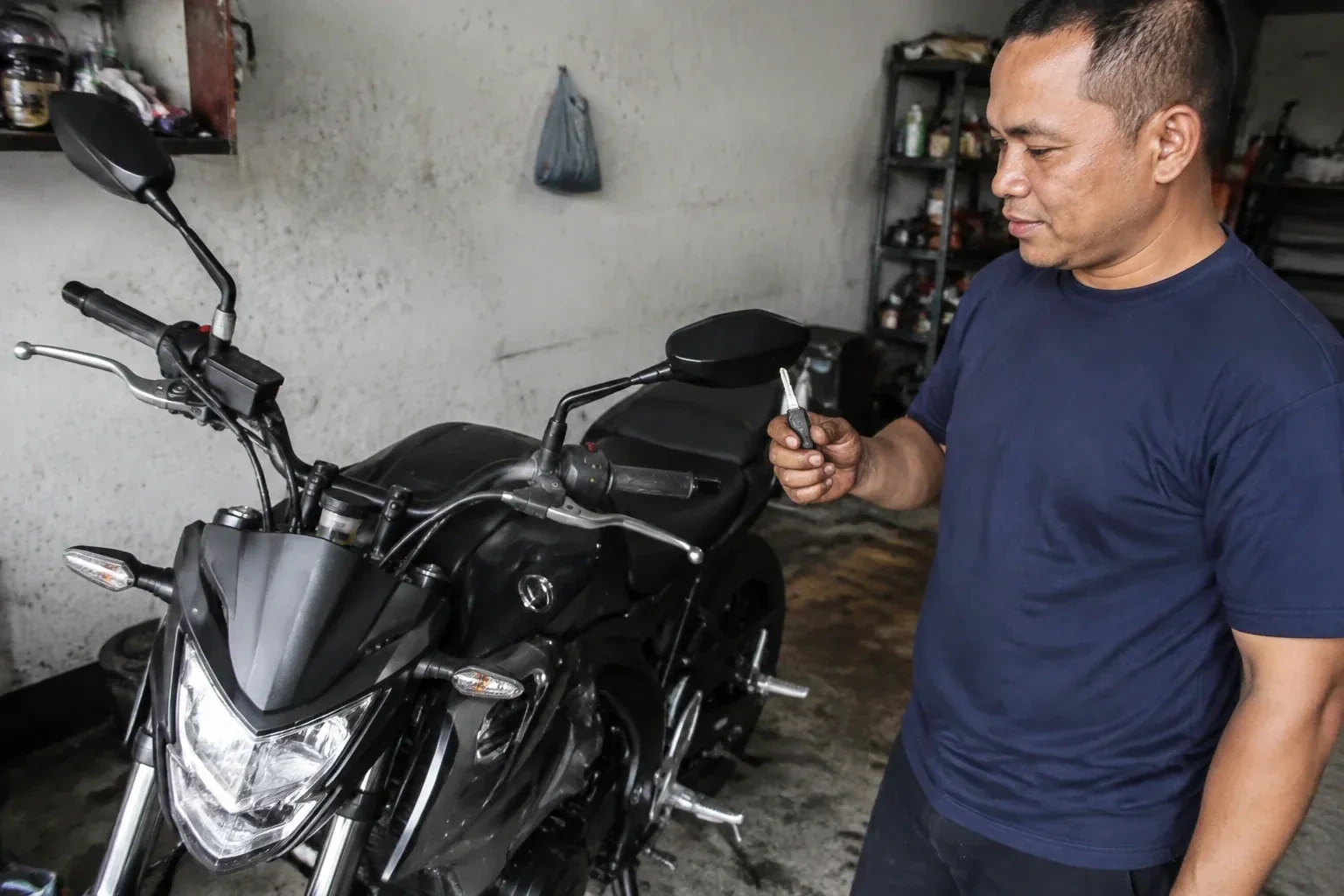
The dash lights come on, the starter cranks, and the engine simply refuses to catch, though the same key has run this bike since it was new. It could be the key and ignition module no longer agreeing, or an ordinary fuel or ignition fault sharing the same…
Motorcycle & Scooter Keys
In plain words
A motorcycle rarely has just one lock. The ignition and steering are usually paired, the seat has its own latch, and older machines add a keyed fuel cap, each of which may or may not share a cut with the others depending on how the factory keyed it. Key service starts by mapping which locks are on the machine and which of them the owner wants running from a single key, and bringing a seat or fuel-cap lock onto the ignition's cut is common where those cylinders are compatible and serviceable, though some models need a matched lock set instead.
How the visit goesYou dig through every jacket pocket and the tank bag twice, but the ignition key that always sits on the same ring is nowhere to be found. The bike sits exactly where you parked it, and nothing in reach will turn that lock.
Oshawa
How the visit goes
Checking the steering lock's condition
Where the steering lock is a separate mechanism from the ignition switch, or has simply sat unused through a season of storage, the locksmith tests how freely it turns before relying on it to hold the front wheel. A lock that resists turning, catches partway, or needs unusual pressure is flagged early, since forcing it with a new key risks the same snapped blade that likely affected the old one. This check takes only a moment but matters, because a steering lock that will not release properly can leave the machine effectively immobile even with a working key in hand.
Decoding a lock with no key at all
Without any key to copy, the lock has to speak for itself. The locksmith picks the cylinder and reads each wafer's resting depth with feeler tools or a small scope, or uses a decoder built for that keyway, translating what is found into a cutting code. A key is then cut to that code and tested in the lock before being trusted on the ignition proper. This route takes longer than copying an existing key, since every wafer has to be read individually, but it produces a key that matches the lock exactly rather than an approximation.
What the immobiliser now expects
On a machine with an immobiliser, the electronics now recognise every key that was paired during the visit and nothing else, which is worth knowing if an old key turns up later: it will still fit the ignition mechanically but will not start the engine on its own. Any spare transponder key made afterward should go through the same pairing process rather than being assumed to work by shape alone. Keeping a note of how many keys are currently paired to the machine makes a future visit, whether for a lost key or an added spare, easier to sort out.
Motorcycle & Scooter Keys
In the van
- Fob shells and batteries
- Manufacturer-approved lock cleaner or lubricant
- Pick and tension tools
- Replacement transponder chips
- Wafer lock decoder
What affects the quote
Same fees day, night or weekend
1Any security upgrade added at the same time
Any additional item chosen during the same visit, such as a disc lock, an alarm, or a lockbox for a spare key, is priced as its own separate addition to the key work.
2Whether the lock needs replacing
Where wafers, springs or the housing itself are worn or damaged beyond a clean repair, replacing the lock rather than continuing to chase a fit is the more practical route, and is quoted as its own item.
3Make, model and age of the machine
Make, model and age decide how common the keyway and blank are. A widely used platform is usually the more straightforward case; an uncommon or older machine can take longer to source parts for.
Motorcycle & Scooter Keys: questions
I bought a used bike with just one worn key. What happens now?
The locksmith first identifies every lock on the machine, ignition, seat and fuel cap included, and tests the key that came with it against each one. Whatever the existing key does not already cover is then cut or decoded to match, so the outcome is a complete, known set of keys rather than a single blade of uncertain history. It is a common situation and does not require any prior records to resolve.
Can the seat, fuel cap and ignition all be set to the same key?
On many serviceable, compatible systems, yes. Each lock is opened and its internal wafers are replaced with a set cut to match the ignition's combination, the same principle used to rekey a house lock applied to smaller hardware. Every lock is tested individually afterward so the finished key is confirmed against each one rather than assumed to work. Locks that were never on the same key from the factory can usually be brought together this way during one visit.
Do I have to have the original key for you to cut a new one?
No. When every key for the machine is gone, the locksmith reads the lock directly, working out each wafer's depth by picking and reading the cylinder or using a decoder built for that keyway, and cuts a fresh key to the code that comes out of that reading. It takes longer than copying an existing key, since every wafer is read individually, but it produces a key that matches the lock rather than a guess.
Car Keys
- Car Key ReplacementThe fob went through the washing machine in a jacket pocket.
- Spare Car Key DuplicationA car sits at the cottage all season, and the only key to it lives on a ring three hours away in…
- Key Fob ProgrammingA new driver has joined the household, and the one existing fob is the only key anyone has ever had…
Motorcycle & Scooter Keys near you
Every lock service we provide in Oshawa starts with the same first step, which is looking at the door properly before deciding anything. The individual pages below explain what that look involves for each job, how the work is carried out, and what to expect from the hardware afterwards.